Gears of Change: Firearms and the Age of Mechanization
By
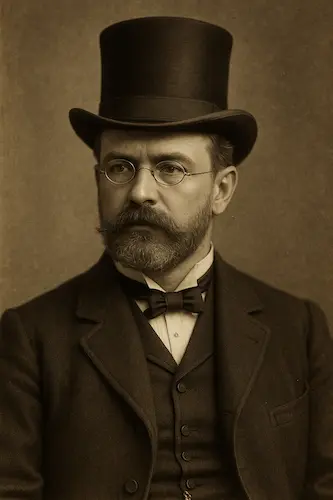 Orme Dumas
| March 24, 2026
Orme Dumas
| March 24, 2026
By the late 19th century, the frontier was no longer defined solely by distance or danger. It was increasingly shaped by machines.
Factories grew more precise. Parts became interchangeable. Skilled handwork gave way — slowly, unevenly — to repeatable processes that promised consistency at scale. Firearms did not merely benefit from this transformation; they became some of its clearest expressions.
From Craft to System
Earlier firearms bore the marks of individual labor. Variations were expected. Repairs often required filing, fitting, and adaptation.
Mechanization changed expectations.
By the 1870s and 1880s, revolvers were increasingly designed as systems — assemblies of standardized parts intended to function predictably across thousands of examples.
This shift altered not only manufacturing, but how users understood reliability itself.
Firearms Featured: Precision in Practice
Smith & Wesson .38 Double Action, 2nd Model (c. 1880)
The .38 Double Action reflects a moment when mechanical confidence was becoming central to firearm design. Its double-action mechanism allowed rapid operation, but only because tolerances had tightened enough to make such complexity dependable.
This was not innovation for novelty’s sake — it was engineering responding to a changing world.
Colt New Pocket (1893)
Compact, modern, and efficient, the Colt New Pocket embodied late-century industrial confidence. Its clean lines and consistent execution speak to a factory culture that valued uniformity as much as ingenuity.
Industrial Confidence and Social Change
Mechanized firearms coincided with a society in motion:
- Expanding railroads
- Growing cities
- More structured law enforcement
- Increased civilian ownership for practical, not experimental, reasons
Revolvers became tools people trusted out of the box, not projects requiring constant adjustment.
What Mechanization Made Possible
This era laid the groundwork for:
- Modern repair practices
- Interchangeable service parts
- National distribution networks
- Standardized training and use
Firearms were no longer just objects — they were products of an industrial ecosystem.
Closing Reflection
Mechanization did not erase craftsmanship; it redefined where craftsmanship lived.
In these revolvers, precision moved from the bench to the process — and changed firearms forever.
Respectfully yours, from the era of percussion caps and perseverance,
— Orme Dumas
Firearms Historian and Archivist
