Mechanical Curiosities by the Fire
By
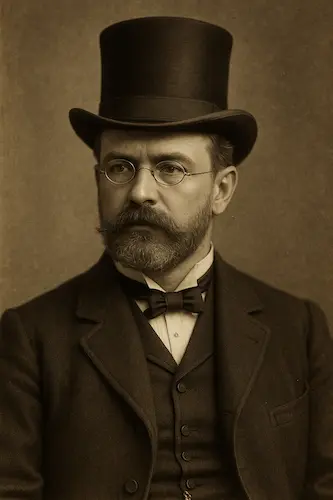 Orme Dumas
| February 03, 2026
Orme Dumas
| February 03, 2026
Winter evenings on the frontier were long. Once the day’s labor had ended and supper cleared, there remained hours to fill — hours when light was precious, movement minimal, and conversation slow.
It was during these evenings, seated near the fire, that many people became intimate not just with stories and ledgers, but with objects. Tools were cleaned, repaired, and examined. Knives were honed. Traps were checked. And firearms — particularly the smaller and more unusual examples — often found their way into careful hands.
Not all guns were made equal in purpose. Some were made to provoke curiosity.
The Fireside as a Workshop
The frontier did not offer specialized spaces for every task. Kitchens doubled as workshops. Tables served as benches. The hearth provided warmth, light, and time.
Small mechanical objects lent themselves to this environment. A revolver could be disassembled, wiped down, and reassembled without fuss. Its workings invited inspection: springs, pawls, ratchets — each part revealing something about the mind that designed it.
In winter, when the pace of life slowed, people noticed such details.
Curiosity Over Necessity
Not every firearm owned was carried daily or relied upon for food. Some existed simply because they were, well, interesting.
Manufacturers of the mid-19th century were unafraid to experiment. Folding triggers, unconventional lockwork, unusual barrel groupings — many designs were attempts to solve problems that may not have existed, or to appeal to buyers who valued novelty as much as function.
These revolvers were conversation pieces long before they were collectibles.
Firearms Featured: The Odd and the Ingenious
Allen & Thurber Pepperbox (circa 1845)
The pepperbox revolver occupies a peculiar place in firearms history. Neither elegant nor especially refined, it nonetheless represents a moment when designers were willing to trade balance and sighting for simplicity and firepower.
Multiple barrels eliminated the need for complex indexing systems, at the cost of weight and precision. By later standards, pepperboxes were ungainly — but to their owners, they were robust, fascinating machines.
Handled by firelight, each barrel told the same story: a solution that worked well enough to endure for decades.
Wesson & Leavitt Belt Revolver (circa 1850)
Far rarer, and far more consequential, the Wesson & Leavitt belt revolver represents ingenuity under constraint. Designed in the shadow of Colt’s patents, it employed a distinctive sliding magazine system that avoided direct infringement — at least temporarily.
Its fate is well known: production halted by litigation. But its legacy remains as a reminder that innovation often flourishes at the margins.
This was a revolver that invited study. Its mechanisms are not immediately obvious, and that very complexity rewards patience.
Winter Evenings and Mechanical Literacy
In an era before instruction manuals were common, familiarity came through handling. Owners learned how things worked because they had to. A broken spring in January was not easily replaced. Understanding one’s tools was a form of self-reliance.
Curious firearms encouraged that learning. They demanded attention. They rewarded those who took the time to understand them.
It is not difficult to imagine someone turning such a revolver over in their hands while the wind rattled the windows — learning its language by feel rather than by text.
From Curiosity to Heirloom
Some of these odd designs were short-lived. Others lingered just long enough to influence what followed. Many were eventually eclipsed by simpler, more standardized revolvers.
Yet they endured in families and collections precisely because they were different.
A pepperbox on the mantel. A belt revolver wrapped carefully in cloth. These objects became markers of a certain kind of ingenuity — reminders that the path to refinement is rarely straight.
Why These Objects Matter Now
Today, such revolvers are often dismissed as evolutionary dead ends. But to do so misses their cultural value.
They tell us how people thought about safety, concealment, convenience, and novelty. They show us a world where innovation was not centralized, where dozens of manufacturers tried their luck with steel and ideas.
Seen by firelight, then and now, these curiosities speak not of failure — but of ambition.
Closing Reflection
Winter slowed the world enough to allow attention. In that stillness, mechanical curiosities found their audience.
These revolvers were not always practical. They were not always successful. But they were thoughtful — and thoughtfulness, in an age of necessity, was worth admiring.
Until the next story sparks from walnut and wrought iron,
— Orme Dumas
Historian of Curiosities, Fashioned Steel, and Forgotten Advertisements
