The Gentleman's Repeater: Winchester Model 1873 in .38 WCF
By
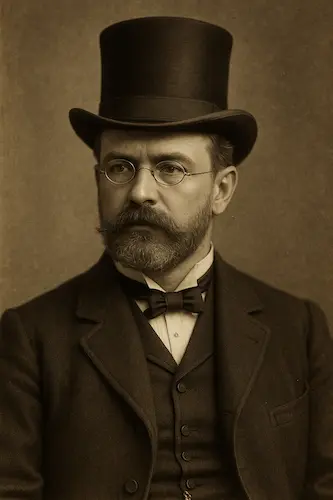 Orme Dumas
| July 15, 2025
Orme Dumas
| July 15, 2025
In my many years traversing this fine country by rail and riverboat, I’ve seen a great number of rifles come and go—some loud as thunder, others sleek as a river otter. But among them all, one has earned a permanent seat by the hearth: the Winchester Model 1873 chambered in .38 WCF.
Now, I’ve always believed a man ought to carry a rifle that suits the land he works and the game he chases. In the Willamette Valley—a patchwork of fog-soaked orchards, black loam fields, and hills thick with timber—the .38 WCF reigned with quiet confidence. Not brash like the .45-70 buffalo guns out east, nor as common as the .44-40, but the .38-40 had a balance to it. A certain civility.
Let’s get one myth cleared up: despite its name, the .38 WCF actually fires a bullet closer to .40 caliber. Marketing, it seems, has always fancied flair over fact. But what mattered to the working folk of Oregon wasn’t the decimal point—it was that this cartridge was light on recoil, quick to cycle, and carried enough wallop to drop a blacktail buck or send a coyote packing.
Introduced in 1884, just a few years after the Second Model 1873 debuted, the .38 WCF was a cartridge meant for both rifle and revolver. That dual-purpose nature made it a favorite among ranch hands, homesteaders, and loggers from Salem to Sweet Home. A fellow could pack one box of shells and know he was prepared whether he carried a lever rifle in his scabbard or a Colt on his hip.
One example in my collection bears mention—a rather dignified Winchester 1873, special-ordered with an extended barrel and fitted with a set trigger. It’s a gentleman’s rifle, make no mistake. Where a standard 20-inch carbine might have hung behind the bar at a dusty stage stop, this long-barreled variant seems made for the marksman who knew the value of a steady hand and a little mechanical encouragement.
I remember a man named Emory Haynes, a farmer just outside of Silverton, who swore by his .38 WCF Winchester. Said it had taken more deer than his neighbor had cows. Whether that was true or just frontier ribbing, the rifle had certainly seen its share of barn doors, saddle bags, and stormy ridgelines.
The Second Model itself was no slouch—refined from the first, with a machined dust cover rail and a smoother cycling action. Elegant in blued steel and walnut, yet rugged enough to endure a lifetime of Oregon winters. I once saw one still slinging rounds after half a century of farm duty, its barrel browned with honest use and stories.
Some say the .38 WCF faded from favor as bolt-actions and high-velocity rounds took center stage in the 20th century. And perhaps they’re right. But rifles like these weren’t just tools—they were companions, passed from father to son, each notch in the stock marking a season, a hunt, a memory.
If you ever find yourself wandering through a dusty Willamette barn or perusing the back wall of a country gunsmith’s shop, keep an eye out. You might just spot one of these gentlemanly repeaters resting quietly, waiting to be slung once more.
Until next time, Orme Dumas
